
The challenge
- ! Routes are drawn once and never revisited, so trucks crisscross the same neighborhoods and rack up dead miles.
- ! Dispatchers hand-sequence stops in a spreadsheet, and a single add-on or skip blows up the whole day.
- ! Drivers detour to bins that were not ready while half-full containers get serviced too early.
- ! Fuel is one of your top line-item costs and you have no clear lever to pull on it.
- ! A late callout or breakdown means manually reshuffling stops across multiple trucks under pressure.
How Haultro answers
- ✓ Haultro ingests every stop, service window, truck, and disposal site, then solves for the shortest, lowest-cost sequence that still honors every constraint.
- ✓ Routes re-optimize automatically as bins fill, traffic shifts, and new jobs land, so the plan keeps up with the day instead of going stale by 9am.
- ✓ A 48-72 hour fill forecast lets you skip bins that are not ready and pull forward the ones about to overflow.
- ✓ When a truck goes down or a driver calls out, Haultro rebalances stops across the remaining fleet in seconds, not hours.
- ✓ Optimized sequences flow straight to the Haultro Driver app with turn-by-turn navigation, so drivers run the plan exactly as built.
- ✓ Routes can be compared with recorded driver and accepted-provider location evidence, with source freshness kept visible.
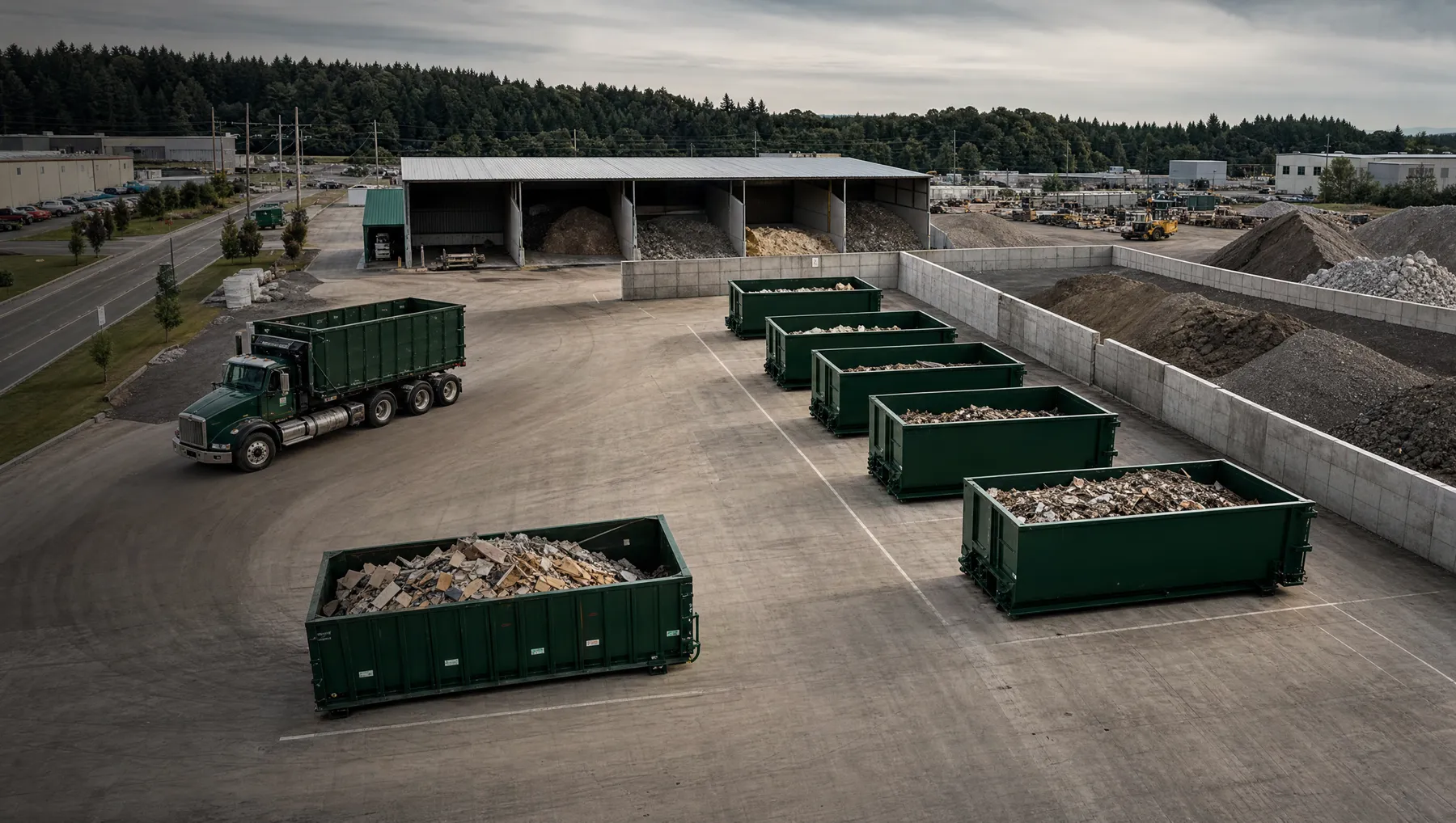 Route optimization · Connected to the work on the ground
What the optimizer accounts for
Built around real-world hauling constraints
This is not a generic delivery solver. Haultro optimizes for the variables that actually decide a waste route's cost.
Truck capacity and type
Volume, weight limits, and which trucks can service roll-off, front-load, or residential routes.
Service windows
Commercial time windows, residential set-out rules, and gated or restricted-access sites.
Disposal and tipping stops
Routes a full truck to the right landfill, transfer station, or recycling facility before continuing.
Provider-gated traffic
Uses configured-provider traffic for supported matrices. Road-level low-bridge, turn, hazmat, and weight restrictions are not currently automated.
Bin fill levels
Prioritizes containers the 48-72 hour forecast flags as near-full and defers the ones that are not ready.
Outcomes
Fewer miles, lower cost, cleaner service
Reviewable route sequences designed to reduce avoidable miles while honoring the constraints recorded in Haultro.
Fewer missed pickups because near-full bins get prioritized and skips get caught before the truck rolls.
Dispatchers stop hand-sequencing and start managing exceptions.
Drivers spend less time backtracking and more time servicing stops.
How it works
Adopting route optimization.
Connect your stops, trucks, and sites
Import customers, containers, service windows, truck capacities, and disposal locations, or sync them from your existing scheduling, telematics, and billing data.
Set your constraints and goals
Tell Haultro what matters: minimize fuel and miles, honor commercial time windows, balance hours across drivers, and respect truck and access limits.
Generate the optimized route plan
The solver sequences each truck against capacity, fill forecasts, time windows, and disposal stops; configured-provider traffic is used only for supported matrices.
Dispatch to the Haultro Driver app
Push the sequenced stops to drivers with turn-by-turn navigation and proof of service, so the plan reaches the cab without retyping.
Re-sequence and review
When jobs or truck assignments change, an operator can regenerate or adjust the sequence. Configured telematics and traffic remain provider-gated, and every recommendation remains reviewable.
FAQ
Questions, answered.
How can Haultro help control fuel cost?
Haultro gives dispatchers a constraint-aware sequence they can review to reduce avoidable miles. Savings are not guaranteed and depend on route density, operating constraints, provider availability, adoption, and the starting plan.
Does the route update during the day?
Operators can add work, change assignments, and regenerate or manually adjust the sequence. Provider-backed traffic and telematics affect the workflow only after that provider is configured and accepted.
How do drivers get the route?
Published stop sequences are available in Haultro's driver workflow with navigation handoff and proof-of-service capture. Native app distribution and field-device acceptance remain separate deployment gates.
Will it route trucks to the right disposal site?
Yes. Haultro treats landfills, transfer stations, and recycling facilities as part of the route, sending a full or finished truck to the correct site at the right point in the run.
What if a truck breaks down or a driver calls out?
A dispatcher can move affected stops to available trucks and regenerate or adjust the sequence. The change remains human-reviewed rather than being presented as an automatic recovery guarantee.
Get started
Put this outcome on your routes.
We'll tailor a demo to your fleet and the business you run.