
The challenge
- ! Routes inherit dead miles from manual sequencing and stale assumptions.
- ! Dispatch cannot compare the planned route with current accepted-provider position evidence.
- ! Near-full containers and landfill cutoffs force late detours.
- ! A modeled fuel outcome gets repeated as a guarantee without a customer baseline.
- ! Idle-event and fuel-burn claims are unsafe when the connected provider does not supply those event classes.
How Haultro answers
- ✓ Optimize stop order against distance, capacity, time windows, service constraints, fill evidence, and disposal context.
- ✓ Use traffic matrices only when a healthy configured map provider supports the route size.
- ✓ Use accepted-provider truck positions as current dispatch context without promising a universal cadence.
- ✓ Keep human overrides and pinned stops authoritative during re-sequencing.
- ✓ Measure mileage or fuel outcomes against a defined customer baseline instead of treating representative targets as guaranteed.
- ✓ Do not claim idle-event, harsh-driving, or fuel-burn analytics when those normalized records are not in the current production contract.
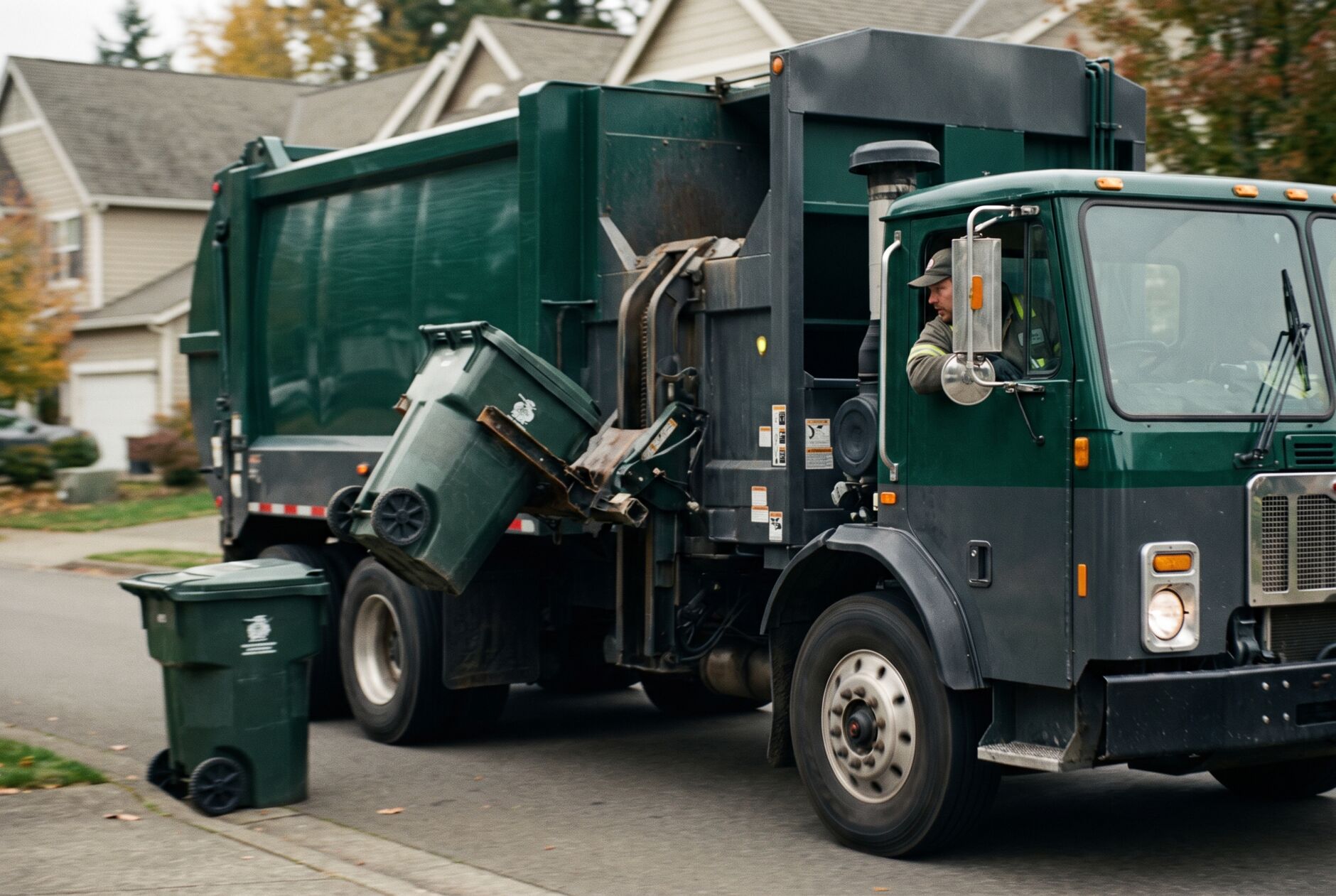 Reduce fuel costs · Connected to the work on the ground
Where route waste hides
Review the miles the route did not need
Stop sequence
Compare the governed sequence with capacity, time-window, fill, and disposal constraints.
Disposal legs
Use facility location and cutoff evidence to reduce avoidable backtracking.
Same-day changes
Insert authorized work and re-sequence remaining eligible stops without changing locked work.
Provider context
Use traffic or truck position only when the configured connection is healthy and its freshness is known.
How it works
Adopting reduce fuel costs.
Load the constraints
Set stops, truck capacity, time windows, service requirements, fill evidence, and disposal context.
Accept provider context
Configure maps or telematics only after credentials, scopes, tenant mapping, sandbox tests, and live acceptance pass.
Build and review
Generate the route, keep human pins and restrictions authoritative, and review any re-sequencing proposal.
Measure the result
Compare actual route mileage or customer-supplied fuel evidence with a documented baseline and period.
FAQ
Questions, answered.
Is a fuel-savings percentage guaranteed?
No. Haultro does not guarantee a fuel result. Any outcome requires a customer-specific baseline, measurement period, route mix, provider coverage, and acceptance method.
Does Haultro detect excessive idling?
Not in the current normalized telematics contract. The current event classes are location, engine, fault, and HOS. Idle-event rules and reports are not advertised as active.
Do I need new telematics hardware?
Not when a built adapter supports the customer's existing provider and the required scopes. Samsara, Geotab, Verizon Connect, and Motive adapters still require live acceptance.
How fresh are truck positions?
Freshness depends on the configured provider, customer plan, scopes, connection health, and delivered cadence. Haultro shows source freshness rather than promising a universal interval.
Get started
Put this outcome on your routes.
We'll tailor a demo to your fleet and the business you run.